Showing posts with label Other Tech. Show all posts

Tuesday, 8 November 2011

Honda ASIMO robot | Honda Robotics


        Robots are the mechanical humans.  Honda company was introduced its latest robot Asimo is a humanoid robot. This robot  Standing at 130cm and weighing 54 kilograms. The robot resembles a small astronaut wearing a backpack and can walk or run on two feet at speeds up to 6 km/h.

      The name is an acronym for the "Advanced Step in Innovative MObility". from a Online magazine, The Future Of Things (TFOT), states that Honda did not name the robot in reference to science fiction writer and inventor of the three rule of Robotics, Isaac Asimov. The transliteration of  as “asimo” uses the  of romanization rather than the more familiar Hepburn system of the romanization which renders it as “ashimo”.

        ASIMO is the culmination of two decades of humanoid robotics research by Honda company engineers. ASIMO robot can run, walk on uneven slopes and surfaces, turn smoothly, climb stairs, and reach for and grasp objects These are the advantages. ASIMO can also comprehend and respond to simple and voice commands. ASIMO has the ability to recognize the face of a select group of individuals. Using its camera eyes, ASIMO can map its environment and register stationary objects. This robot can also avoid moving obstacles as it moves through its environment great technology.
Sunday, 6 November 2011

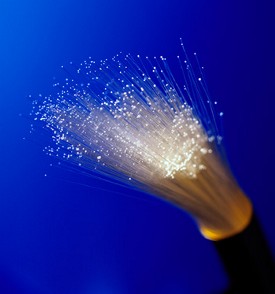
Fiber Optic Technology | Fiber Optic Technology Overview | Features Of Fiber Optic Technology Features


   Now Everywhere on this Earth hair-thin optical fibers carry vast huge quantities of information from one place to another place. There are so many desirable properties of optical fibers for carrying the information. They have enormous information-carrying capacity, are low cost, and possess immunity from the many disturbances that can afflict electrical wires, wireless communication links. The superiority of optical fibers for carrying information from place to place is leading to their rapidly replacing older technologies. Optical fibers have played a key role in making possible the extraordinary growth in world-wide communications that has occurred in the last 25 years, and are vital in enabling the proliferating use of the Internet.

Light is channeled through these fibers. Not only light but everything associated with light, images for example, also get transmitted from one end of the fiber optic to the other end. Bends and turns in the fibers pose no hindrance in this transmission.  
The core of fiber optic materials is made of glass or plastic and it is highly transparent. This core is covered with a covering known as ‘cladding’. When light enters from one end and travels through the length of the fiber optic, this ‘cladding’ does not allow it to scatter outside the material.


The ‘cladding’ reflects all the light from inside the surface of the fiber optic. So, even if a bundle inside the fiber optic is not straight, the image is not affected. Fiber optics are capable of carrying light and other information over a wide range of distance. The distance may vary from a few centimeters to many hundred kilometers.  
Fiber optics are primarily of two types. The single-mode fiber optic and the Multi-mode fiber optics.


Single Mode Fiber Optic

It is suitable  for transmissions over long distance  that happen at tremendous speed. They are capable of this because their core is very small and they have the property of accepting light only in the direction of the axis of the fibers. Small lasers are used to send light into fibers. The fibers are joined with low-loss connectors so that there is very less distortion of the light signal.

Multi Mode Fiber Optic

In multi-mode fiber optic materials the cores are big and they also can accept light from a variety of angles and can also function with a variety of light sources. The connectors are used within the materials for fiber are not very expensive. It is done because these fiber optic materials are not meant for long distance transmission only short distance transmission.

EYE IN SKY FINDS 17 LOST PYRAMIDS IN EGYPT | PYRAMIDS IN EGYPT


     This is a new satellite survey about Egypt.  Egypt has identified 17 lost pyramids and more than thousand (1,000) un-excavated tombs.  More than 3,000 ancient settlements were also revealed by looking at infra-red images which show up underground of  building.  The US Egyptologist Sarah Parcak's team  analysed images from satellites orbiting 700km above the earth, equipped with cameras so powerful they can pin-point objects less than 1m in diameter on the earth's surface. The Infra-red imaging was used to highlight different materials under the surface of Earth.

Sunday, 30 October 2011

SENSITIVE SKIN FOR ROBOTS | Robots with sensitive skin


      The Technical University of Munich (TUM) Scientist, Germany are developing a synthetic (sensitive) skin for robots with a similar to as that of  human skin.  The synthetic skin will provide important tactile information to the robot and thus supplement its perception formed by camara eyes, infrared scanners and gripping hands.  As with human skin, the way artificial skin is touched could, for example, lead to a spontaneous retreat (when  the robot hits an object) or cause the machine to use its eyes for the first time to search for the source of contact.  Such behaviour is expecially important for robotic helpers of people travelling in constantly changing environments. 

    The centrepiece of the new robotic shell is  a five square cm hexagonal plate or circuit board.  Each small circuit board ccontains four infrared sensors that detect anything closer than one cm. "This sensor can register pressure ranging form a firm pinch between your thumb and forefinger to twice the pressure exerted by an elephant standing on one foot.

Saturday, 29 October 2011

FOLDABLE TWIN-SEATER SPORT PLANE | The Foldable Sport Plane


     Foldable twin seater sport plane.  A prototype of the American light weight-sport aircraft, which is being tested for the past 3 years, is likely to enter the production  in the second quarter of 2012.  The two-seater ICON A5 is being developed by California-based Icon Aircraft.  Its wings can be folded easily from the cockpit in under five minutes while on water or land.  The financing was led by investors Satyen Patel and Bart Becht, who have expertise in building consumer product companies. 
Related Posts Plugin for WordPress, Blogger...